Hello,Welcome to Normal Website!

Service hotline400-6177-880
Hello,Welcome to Normal Website!
Service hotline400-6177-880

Contact US
Tell:+86-571-85691658
Fax:+86-571-28867000
E-mail:[email protected]
Address:North block, 9 block,, Jiangling, Binjiang District, Hangzhou, Zhejiang

Product Certification

Provide energy efficiency EUP rating and ERP certification
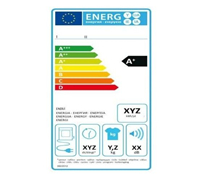
Energy efficiency rating
Energy efficiency rating is a classification method that indicates the difference in energy efficiency of products. According to relevant national standards, the current classification is to divide the energy efficiency of air conditioners into five levels: 1, 2, 3, 4, and 5.
The "Management Measures for Energy Efficiency Labeling" came into effect on March 1, 2005, and household air conditioners were the first batch of products in China to be mandatory for energy efficiency rating labeling. The energy efficiency label affixed to air conditioning products can help buyers determine the power consumption:
Level 1 indicates that the product has reached the international advanced level, with the most energy-efficient and lowest energy consumption; The energy efficiency ratio is above 3.4;
Level 2 indicates relatively energy-saving; The energy efficiency ratio is 3.2;
Level 3 indicates that the energy efficiency of the product is at the average level of the Chinese market; The energy efficiency ratio is 3.0;
Level 4 indicates that the energy efficiency of the product is lower than the market average level; The energy efficiency ratio is 2.8;
Level 5 is a market access indicator, and products below this level are not allowed to be produced or sold; The energy efficiency ratio is 2.6.
The so-called energy efficiency ratio refers to the ratio of the cooling capacity to the effective input power of an air conditioner during cooling operation.
The energy efficiency ratio between level 1 and level 5 air conditioners of the same brand and power is about 25% different. Besides power consumption, the cooling effect of a 5-level energy efficiency level air conditioner is only 75% of that of a 1-level energy efficiency level air conditioner. That is to say, the higher the energy efficiency ratio, the more energy-efficient it is, while the lower the energy efficiency level, the better. According to relevant regulations, by 2009, air conditioning products sold on the market must reach level 2 or above.
Relevant personnel remind consumers that currently, the energy efficiency data of air conditioners are marked by manufacturers themselves, and it is inevitable that some manufacturers will falsify and falsely report the energy efficiency of air conditioners.
In 2009, the European Union passed a new energy efficiency rating standard for household appliances. The new EU energy efficiency rating standard expanded the scope of A-level energy labels for existing household appliances, eliminating the simple A-level energy labeling and replacing it with a grading standard that combines letters and numbers. The larger the number, the more energy-efficient the appliance. The three new levels A-20%, A-40%, and A-60% respectively represent a 20%, 40%, and 60% power savings compared to level A. The energy efficiency levels of EU household appliances range from A to G, with A being the most energy-efficient and consuming over 45% less electricity than similar products.
IEC 62552 Ed 1.0: 2007 Household Refrigeration Equipment - Characteristics and Test Methods
EN ISO 15502: 2005 Household Refrigeration Equipment - Characteristics and Test Methods
EN 153: Measurement method for electrical energy consumption of household refrigerators, frozen food storage cabinets, and combination refrigerators with food freezing and related characteristics powered by the power grid in 2006
SASO 2664: Energy consumption performance and capacity of household refrigerators, refrigerated freezers, and freezers in 2007
ISO 7371: 1995 Characteristics and test methods of refrigerators with or without low-temperature compartments for household refrigeration equipment
ISO 8187: 1991 Household refrigeration equipment - Characteristics and test methods for refrigerated containers
ISO 5155: 1995 Household refrigeration equipment - Characteristics and test methods for frozen food storage cabinets and food freezers
ISO 8561: 1995 Performance and testing methods for refrigerators, freezers, freezers, and low-temperature refrigerators with forced circulation cooling for household frost free refrigeration equipment
ANSI/AHAM HRF-1-2007 Energy consumption, performance, and capacity of household refrigerators, freezers refrigerators, and refrigerated cabinets
ANSI/AHAM HRF-1-2008 Energy consumption, performance, and capacity of household refrigerators, freezers refrigerators, and refrigerated cabinets
10 CFR 430, Subpart BAppendix A1- Household Refrigerator
Appendix B1- Household Freezer
CAN/CSA-C300-08 Refrigeration Performance and Energy Efficiency of Household Refrigerators, Refrigerated Freezers, Freezers, and Wine Cabinets
AS/NZS 4474.1:2007+A1: 2007 Household Refrigeration Appliances - Energy Consumption and Performance
AS/NZS 4474.2: 2009 Household Appliance Performance - Refrigeration Equipment - Energy Efficiency Labels and Minimum Performance Requirements
ANSI/ASHRAE Standard 72-2005 Test Methods for Commercial Refrigerators and Freezers
ANSI/AHAM HRF-1-2007 Energy consumption, performance, and capacity of household refrigerators, freezers refrigerators, and refrigerated cabinets
AHRI Standard 1200-2008 Performance Testing Method for Commercial Refrigeration Display Cabinets
ASHRAE standard 117-1992 Performance testing method for closed refrigerators
ASHRAE Standard 32.1-2004 Rating and Test Methods for Bottled and Canned Beverage Retail Machines and Coolers
BSEN 12975-1: 2006 Solar Thermal Systems and Components - Solar Collectors - Part 1: General Requirements
BSEN 12975-2: 2006 Solar Thermal Systems and Components - Solar Collectors - Part 2- Testing Methods
ISO 9806-1: 1994 Testing Methods for Solar Collectors Part 1- Thermal Performance Testing Methods for Glass Collectors
ISO 9806-2: 1995 Testing Methods for Solar Collectors Part 2- Quality Identification Procedure
ISO 9806-3: 1995 Testing Methods for Solar Collectors Part 3- Thermal Performance Testing Methods for Non Glass Collectors
GB/T 6424: 2007 Flat Plate Solar Collector
CSA F378: 2004 solar collector
GB/T 4271: 2007 Test Method for Thermal Performance of Solar Collectors
GB/T 17581: 2007 Vacuum Tube Solar Collector
SRCC standard 100-08: 2008 Testing Methods and Minimum Standards for Solar Collectors
ANSI/ASHRAE standard 93-2003 Test Method for Thermal Performance of Solar Collectors
SRCC document OG-100: 2006 Guidelines for Certification of Solar Collectors
BSEN 12976-1: 2006 Solar Thermal Systems and Components - Factory Installation Systems - Part 1: General Requirements
BSEN 12976-2: 2006 Solar Thermal Systems and Components - Factory Installation Systems - Part 2: Testing Methods
AS/NZS 2712: 2007 Solar and Heat Pump Water Heater - Design and Structure
SRCC document OG-300: Operation Guidelines and Minimum Standards for 2008 Certified Solar Hot Water Systems
SANS 6210: 2009 South African Solar Water Heater Routine Testing Requirements Clause
SANS 6211-1: 2003 Outdoor Thermal Performance Testing Method
SANS 1307: 2009 South African household solar water heater
Please consult NormalTCI for specific questions
National service hotline: 400-6177-880
Email:[email protected]
Copyright @ 2015 NORMAL (HANGZHOU) TESTING & CERTIFICATION CO., LTD.
Tell:+86-571-28906690 E-mail:[email protected] Service Hotline:400-6177-880 Fax:+86-571-28867000
If you have any comments on the website, please email to:[email protected]